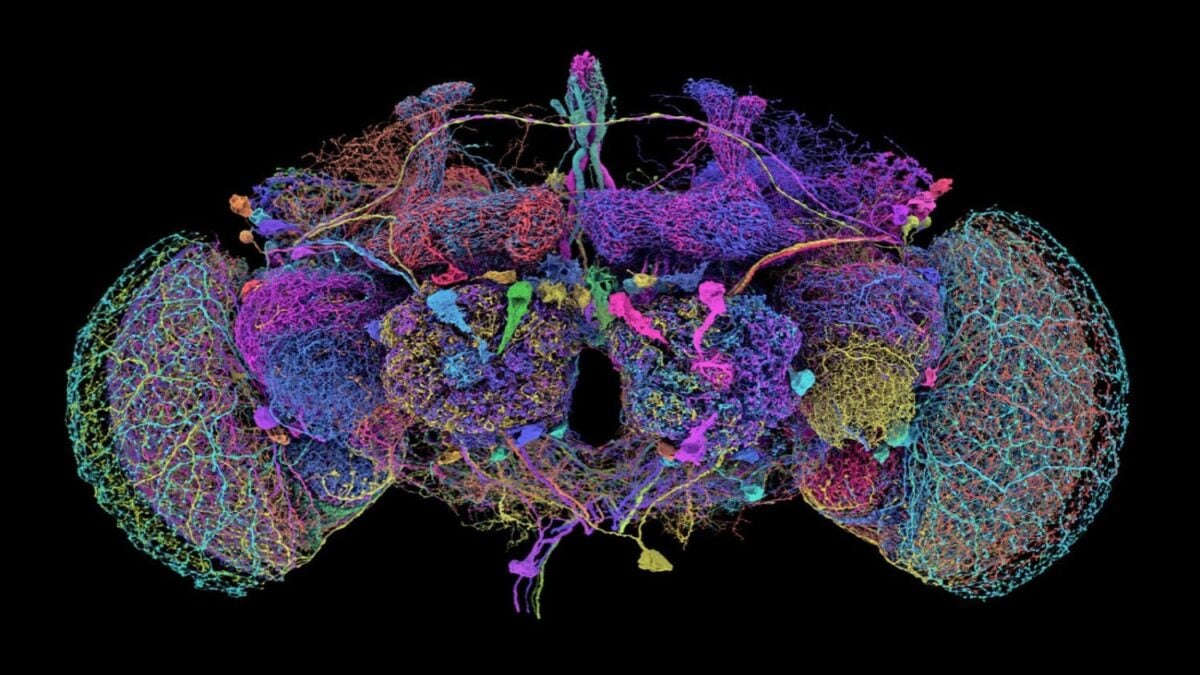
An international research team led by Spanish biochemist Rubén Hervás of the University of Hong Kong has identified a molecular mechanism that may help explain why memory weakens with age, according to Gizmodo en Español. In experiments on aged fruit flies, the researchers found that adjusting levels of a specific protein improved the insects' ability to remember. The work, published in Cell, rests on six years of experiments involving roughly ten million flies, the outlet reports.
The findings have not been shown to apply to humans, and no evidence yet suggests the approach could restore memories already lost in people or treat conditions such as Alzheimer's disease. Even so, Gizmodo en Español describes the result as opening a new line of inquiry into age-related memory decline.
Why it matters
Memory changes such as struggling to recall names, losing details of past experiences, or needing more time to retrieve information are common features of growing older. For decades, scientists have tried to pin down what happens inside the brain as memory starts to falter.
The new study suggests the answer may not lie solely in the loss of neurons or the connections between them. Instead, according to the reporting, the decline may also involve changes in the proteins that help preserve certain memories — changes that appear, at least in flies, to be partly reversible. If similar mechanisms operate in humans, the work could inform research into ways of protecting memory as the brain ages.
What the researchers did
The team examined the brains of fruit flies at eight different points in their lives, from the first days after emergence up to 35 days of age, when the insects show clear signs of advanced aging. The goal was to track how memory-related proteins evolved over time and whether they underwent transformations that could account for weakening recall.
Attention focused on Orb2, a protein that can take on functional amyloid structures needed to hold long-term memories. Amyloid proteins are often associated with neurodegenerative diseases such as Alzheimer's, but some serve useful purposes. In Orb2's case, its molecular arrangement supports the processes that allow particular memories to endure.
According to the findings reported by Gizmodo en Español, these structures can become stiffer and less functional with age, which in turn hampers the cellular machinery that helps keep memories intact.
Chaperones and the memory switch
The turning point came when the scientists altered production of a protein called Funes, which belongs to a class known as molecular chaperones. These proteins help other molecules take on and hold the shapes they need to work properly.
When the researchers raised Funes levels in older flies, the Orb2 structures regained features associated with younger states, and the insects performed better on memory tasks. The reverse also held: increasing a different chaperone, CG6693, produced protein abnormalities and memory problems even in young flies. Together, the two results suggest that the aging of memory may be tied, at least in part, to the deterioration of the molecular systems that maintain recollections.
Funes is not an entirely new name in this field. Research published in the Proceedings of the National Academy of Sciences in January 2026 had already shown that raising the protein improved long-term memory formation in flies, according to the outlet. The new work extends that finding by examining how these structures change during aging and whether some of those effects can be undone.
The protein takes its name from Funes, the Jorge Luis Borges character who could recall nearly everything he experienced — a literary nod whose scientific significance goes well beyond the reference.
The human question
The central open question is whether the mechanism seen in flies has a counterpart in people. Humans carry proteins that are functionally related to Orb2, including CPEB3, which is involved in processes linked to neuronal plasticity and memory.
Hervás has said that if the transformations observed in flies also occur in humans, it might be possible to develop treatments aimed at keeping these proteins in more functional states, according to Gizmodo en Español. He has received funding to investigate whether the molecular mechanisms hold true in humans, and establishing that link would be essential before any therapeutic applications could be considered.
For now, the study offers something researchers have long sought: a molecular explanation for why memory can erode over the years, and a hint that the process may not be fixed. The next step is to determine whether the same biology operates in people — the question on which any future treatment would depend.